You open your keyword research tool and type in "marketing." The results flash across your screen: 4.2 million competing pages. The competition score is maxed out. The estimated cost per click is $47. You stare at those numbers and wonder how anyone breaks through.
Then you try something different. You type "marketing automation for small law firms." This time, the landscape shifts completely. The competition drops to manageable levels. The search volume is smaller, but the intent is crystal clear. Someone searching this phrase knows exactly what they want.
This contrast reveals everything you need to know about keyword strategy. The difference between short tail and long tail keywords is not just about word count. It is about opportunity, intent, and whether your content actually reaches people ready to work with you.
Most business owners waste months chasing broad, competitive terms while ignoring the specific phrases their ideal customers actually use. This guide will show you the practical differences between these keyword types, when each makes sense for your business, and how to build a strategy that generates real results instead of vanity metrics.
Understanding the Fundamentals of Keyword Length
Short tail keywords are the broad, one or two word phrases that seem obvious when you first think about your business. If you run a dental practice, you might target "dentist" or "dental care." If you offer marketing services, "SEO" or "marketing" feel like natural choices.
These terms sit at the top of the search demand curve. They generate massive search volume because they capture everyone searching for anything remotely related to that topic. The problem? That volume comes with zero specificity.
When someone searches "SEO," they could be looking for a definition, a course, a tool, an agency, a job, or an article explaining what the acronym means. You have no idea where they are in their journey or what they actually need.
Long tail keywords flip this dynamic entirely. These are phrases with three or more words that describe a specific need, question, or situation. Examples include "SEO audit checklist for small businesses," "how to track website conversions without coding," or "marketing automation setup cost for service businesses."
The search volume for each individual long tail phrase is lower. But the clarity is exponentially higher. Someone searching "marketing automation setup cost for service businesses" has already decided they want marketing automation. They are comparing options and evaluating whether it fits their budget.
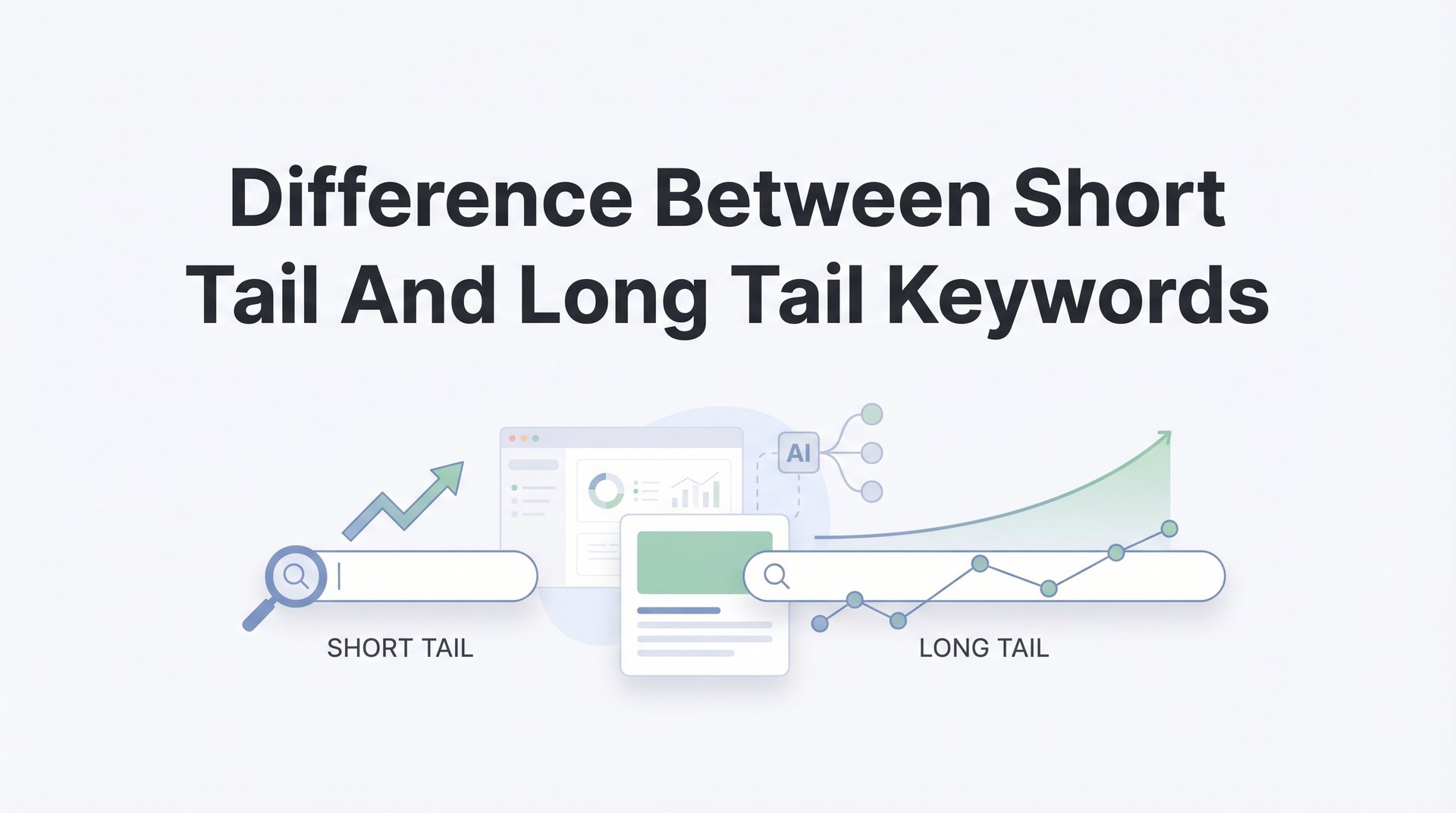
The terminology comes from visualizing search demand as a curve. Short tail keywords form the "head" with high volume and intense competition. Long tail keywords form the extended "tail" where thousands of specific phrases each contribute smaller amounts of traffic that collectively add up to substantial volume.
Think of it like fishing. Short tail keywords are like casting a wide net in the ocean and hoping you catch something valuable among everything else that gets pulled in. Long tail keywords are like fishing with the exact bait your target species prefers, in the specific location where they feed.
The shift from short to long tail is not just about adding more words. It is about moving from vague topics to specific solutions. From general awareness to precise intent. From competing with everyone to connecting with exactly the right people.
How Search Intent Determines Content Success
Search intent is the reason someone types a query into Google. It is the problem they want solved, the question they need answered, or the action they are ready to take. Understanding this intent is what separates content that converts from content that wastes traffic.
When someone searches a short tail keyword like "websites," their intent could point in dozens of directions. They might want to build a website, hire someone to build one, learn about website design, find website templates, understand website hosting, or browse examples for inspiration.
You cannot create content that satisfies all those intents simultaneously. If you write an article targeting "websites," you will either create something so generic it helps no one, or you will focus on one intent and disappoint everyone else who lands on your page.
The result? High bounce rates. Low engagement. Zero conversions. Google notices this pattern and stops ranking your content because users signal that it does not match what they wanted. If you are struggling with visibility, understanding why your website isn't showing up on Google can help diagnose the underlying issues.
Long tail keywords solve this problem by embedding intent directly into the search phrase. When someone searches "how to choose a website builder for service businesses," their intent is unmistakable. They run a service business. They want to build a website themselves. They need guidance on selecting the right platform.
You can create content that directly answers this specific question. You can address the exact concerns someone in this situation faces: ease of use, cost, integration with scheduling tools, mobile responsiveness, and whether they need coding knowledge.
This precision creates a completely different user experience. The searcher lands on your page and immediately recognizes that you understand their situation. They read because the content speaks directly to their needs. They stay because you are providing the exact information they came looking for.
The connection between keyword length and intent clarity is not coincidental. People add words to searches when they want more specific results. "Marketing" is a starting point. "Marketing automation" narrows the field. "Marketing automation for small law firms" eliminates everything irrelevant.
Each additional word filters out mismatches and increases the likelihood that your content delivers what the searcher actually wants. This alignment between content and intent is what drives conversions. Someone who finds exactly what they were looking for is exponentially more likely to take the next step, whether that means booking a call, requesting a quote, or signing up for your service.
Think about your own search behavior. When you search something broad, you are usually exploring. When you search something specific, you are ready to act. Your potential customers follow the same pattern. Long tail keywords capture them at the moment when exploration shifts to decision-making.
The Competition Reality Most Businesses Ignore
Ranking for short tail keywords requires resources most small and mid-sized businesses simply do not have. The top positions are occupied by sites with domain authority built over years, content teams producing hundreds of articles monthly, and technical infrastructure optimized at a level that requires dedicated engineers.
When you target a term like "marketing," you are competing with HubSpot, Neil Patel, Moz, Search Engine Journal, and every major marketing publication on the internet. These sites have thousands of backlinks, millions of monthly visitors, and entire teams focused exclusively on maintaining their rankings.
The same pattern repeats across every industry. "Insurance" is dominated by major carriers and comparison sites. "Legal services" belongs to Avvo, FindLaw, and established law firm networks. "Accounting" goes to Intuit, major firms, and industry publications.
Attempting to outrank these sites on their core terms is not strategic. It is a resource drain that produces no results. You can spend months creating content, building links, and optimizing pages without moving the needle because the gap in authority is simply too large to bridge with the resources available to most businesses.
Long tail keywords change the competitive landscape entirely. When you target "workers compensation insurance for construction companies in Colorado," you are no longer competing with every insurance site on the internet. You are competing with the subset of sites that specifically address this niche.
The competition drops from thousands of major sites to dozens of relevant pages. Many of those pages are poorly optimized, outdated, or only tangentially related to the specific query. Creating genuinely helpful, well-structured content that directly addresses this search gives you a realistic path to ranking.
This is not about finding easy wins or gaming the system. It is about focusing your efforts where you can actually deliver value and achieve visibility. A small accounting firm will never outrank Intuit for "accounting software." But they can absolutely rank for "accounting software setup for home service businesses" by creating content that addresses the specific challenges those businesses face.
The strategic advantage compounds over time. Each long tail keyword you rank for brings qualified traffic. That traffic signals to search engines that your site provides valuable information in your niche. Learning how to build website authority without backlinks can accelerate this process by focusing on signals you can control.
Eventually, this accumulated authority can help you compete for slightly broader terms. But the foundation is built on specific, achievable wins rather than futile attempts to compete where you have no realistic chance of success.
Strategic Uses for Short Tail Keywords
Short tail keywords are not useless. They simply require a different approach and serve different purposes than most businesses initially assume. Understanding when these broad terms make sense prevents wasted effort while capturing their genuine strategic value.
Building topical authority over time is one legitimate use case. If you consistently create comprehensive content around a broad topic, covering every specific angle and question within that domain, you signal to search engines that you are an authoritative source on the subject.
This approach requires patience and volume. You might create fifty articles addressing specific long tail variations before the cumulative authority helps you rank for the broader short tail term. But the strategy works when you commit to truly comprehensive coverage rather than hoping a single article will compete.
Paid advertising campaigns represent another context where short tail keywords can deliver value. When you run Google Ads, you control the targeting, budget, and landing page experience. You are not trying to organically outrank established sites. You are buying visibility for specific searches.
In this scenario, bidding on broader terms can make sense if your targeting and ad copy filter for qualified clicks. You might bid on "marketing automation" but write ad copy that speaks specifically to service businesses, directing clicks to a landing page designed for that audience.
The cost per click will be higher for short tail terms, but if your conversion rate justifies the expense and your targeting eliminates unqualified traffic, the economics can work. The key difference is that you are using paid placement to overcome the organic competition barrier.
Brand awareness goals sometimes justify targeting broader terms even when ranking is unlikely. If you create genuinely exceptional content around a short tail keyword, it might not rank on page one, but it can still attract links, social shares, and attention from industry publications.
This content serves a different purpose than driving organic traffic. It demonstrates expertise, provides value to your existing audience, and creates assets you can promote through other channels. The SEO benefit is secondary to the brand-building value.
The common thread across these legitimate uses is intentionality. Short tail keywords work when they are part of a deliberate strategy with realistic expectations, not when they are chosen because they seem like obvious targets or generate impressive search volume numbers that do not translate to actual business results.
Building a Long Tail Strategy That Compounds
The most effective long tail keyword strategies start with customer conversations rather than keyword tools. What questions do prospects ask during sales calls? What problems do they mention in discovery meetings? What language do they use to describe their challenges?
These real conversations reveal the specific phrases people actually use when they need what you offer. Someone might not search "customer relationship management software." They search "how to keep track of customer conversations without losing details" or "system for remembering client preferences and history."
Document these phrases exactly as customers say them. These become your seed keywords for content creation. They represent real search intent from your actual target audience, not theoretical searches that sound relevant but do not reflect how people actually look for solutions.
Content clusters transform individual long tail articles into interconnected resources that build topical authority. Start with a core topic relevant to your business. Then create multiple articles addressing specific questions, use cases, or aspects of that topic.
For example, if your core topic is "website conversion optimization," your cluster might include articles on "how to add live chat to a service business website," "conversion tracking setup without a developer," "landing page layout mistakes that kill conversions," and "A/B testing tools for small business websites."
Each article targets a specific long tail keyword. But they all link back to the core topic page and to each other where contextually relevant. Understanding internal linking strategy for small businesses helps you structure these connections for maximum SEO impact.
The compounding effect comes from how these articles work together. Someone finds your article on live chat implementation. They read it, find it helpful, and notice your article on conversion tracking. They read that too. Now they have engaged with multiple pieces of your content and see you as a credible resource.
This pattern repeats across different entry points. Some people find your A/B testing article first. Others discover your landing page guide. But the interconnected cluster means a single visitor often consumes multiple articles, spending more time on your site and building trust through repeated exposure to helpful content.
Tracking the right metrics determines whether your strategy actually works. Traffic volume is interesting but meaningless if those visitors never convert. Focus on qualified traffic: visitors who match your ideal customer profile and engage with your content.
Monitor which long tail keywords drive conversions, not just visits. You might have an article that generates modest traffic but consistently produces consultation bookings. That article is exponentially more valuable than one generating ten times the traffic with zero conversions.
This data reveals which topics resonate with people ready to take action. Double down on these areas. Create more content addressing related questions. Expand successful articles with additional detail. Build out clusters around the topics that actually drive business results.
Implementing Your Keyword Strategy
Start with an honest audit of where you currently rank. Use Google Search Console to see which keywords already drive traffic to your site. Look for patterns in the terms where you appear on pages two or three. These represent opportunities where small improvements could move you into visibility. A comprehensive guide on how to audit your website SEO walks you through this process step by step.
Many businesses discover they already rank for long tail variations they never deliberately targeted. Someone wrote an article addressing a specific question, and Google recognized its relevance for related searches. These accidental wins reveal what is already working and where to focus expansion efforts.
Identify long tail opportunities by examining the questions prospects ask, the problems your service solves, and the specific situations where someone needs what you offer. Create a list of phrases that combine your core offering with specific use cases, industries, or challenges.
Prioritize this list based on business value rather than search volume. A keyword with 50 monthly searches that attracts your ideal customer is more valuable than one with 500 searches from people who will never buy. Consider which searches indicate someone is close to making a decision versus just exploring options.
Create content that genuinely answers the question behind each keyword. Do not write for search engines. Write for the person who typed that specific phrase because they need help with something. Explain the concept clearly, provide actionable guidance, and address the concerns someone in that situation actually faces.
Measure success by qualified traffic and conversions. Track which articles generate consultation requests, email signups, or other meaningful actions. Monitor engagement metrics like time on page and pages per session to understand which content truly resonates versus which just attracts clicks that immediately bounce.
Adjust your strategy based on what the data reveals. If certain topics consistently drive conversions, create more content in that area. If some articles generate traffic but no engagement, either improve them to better match intent or deprioritize similar topics in future planning.
This approach builds momentum over time. Each successful article attracts links and shares. Understanding whether outbound links help SEO can further strengthen your content's credibility and search performance. Each piece of helpful content builds trust with potential customers. Each ranking improvement increases your visibility for related searches. The cumulative effect creates sustainable growth rather than the boom-and-bust cycle of chasing trending topics.
Moving Forward with Clarity
The difference between short tail and long tail keywords comes down to strategic focus. Short tail terms offer massive volume with impossible competition and unclear intent. Long tail phrases provide manageable competition, specific intent, and realistic opportunities to rank and convert.
Most small and mid-sized businesses will see better results by focusing on long tail keywords that match specific customer needs. These phrases capture people who know what they want and are ready to take action. They create opportunities to rank, drive qualified traffic, and generate actual business outcomes.
Short tail keywords have their place in a mature strategy built on comprehensive topical coverage, paid advertising campaigns, or brand awareness initiatives. But they should never be the starting point for businesses trying to establish visibility and generate leads through organic search.
The most effective approach combines customer insight with strategic execution. Listen to how prospects describe their problems. Create content that addresses those specific needs. Build interconnected resources that demonstrate comprehensive expertise. Measure what actually drives business results and focus your efforts there.
If you want help building an SEO strategy focused on conversions rather than vanity metrics, North Valley Solutions works with businesses to identify the specific keywords and content approaches that generate real revenue. We focus on long tail opportunities that match your ideal customers and create systems that turn traffic into booked calls.
Book a Free Discovery Call to explore whether a targeted keyword strategy could transform your lead generation results.